The Heritage of Western Hats in Upington
The Influence of the Kalahari Climate on Hat Design
The Kalahari sun does not negotiate, and neither does the heritage of western hats Upington. Since the early 1900s, local hatters have crafted crowns that honor the Boer War era while adapting to the desert’s demands.
That adaptation is visible in every brim and band. The climate imposes its own rules: scorching days, chilling nights, relentless wind, and dust storms. These forces shaped a design philosophy unique to this region.
- Wide brims to cast shadows over the neck
- Ventilated crowns for air circulation
- Reinforced sweatbands for long treks
Each element answers the Kalahari. Thus, these hats are survival tools, a direct response to temperature and time.
Traditional Hat Styles Worn by Early Upington Settlers
Early Upington settlers did not pack lightly. Their wagons carried Bibles, seeds, and an unreasonable number of hats. The traditional western hats Upington became known for emerged from frontier practicality, not fashion. That distinction matters.
Men favoured the Boer War style crown with a flat brim, a silhouette honed for visibility across open ground. Others wore the slouch hat, brim pinned on one side, a habit borrowed from mounted infantry. Women chose wide straw styles with veils, less for elegance and more for keeping beetles out of their hair.
Look at the common elements of those early hats:
- Plain leather bands with no ornament
- Stiff brims that survived wind and jostling
- Natural felt or wool that shrugged off dust
Every hat answered a practical question. That is why western hats Upington today still respect those early patterns.
Hat Making as a Local Craft and Cultural Symbol
The number of working hat makers in Upington has held steady for decades, which says something about the value of this trade. These craftspeople do not chase trends. They shape felt and leather into durable western hats Upington residents wear for work and ceremony alike.
Hat making here is a heritage craft passed down through families. The methods have changed little since the early settlers first established the trade. The result is a cultural symbol that ties the town to its frontier roots without nostalgia getting in the way.
Those who make western hats Upington by hand share a set of practices:
- measuring the buyer’s head with a conformateur
- steaming and shaping the felt crown
- stamping the leather band with the maker’s mark
This process turns a simple object into a marker of identity, one that carries meaning across generations.
Popular Western Hat Styles for Upington Residents
Classic Wide-Brimmed Felt Hats for Cooler Evenings
Upington evenings turn cold, catching newcomers off guard. When the sun drops behind the Orange River, the temperature plummets, and that is when a classic wide-brimmed felt hat becomes essential. Locals treat western hats Upington as essential evening gear.
The dense felt blocks the chill wind sweeping across the Kalahari after dark. A good fur felt hat holds its shape through years of use, developing a personal crease that tells your story. The wide brim keeps your head warm as stars appear.
Popular choices include:
- The Cattleman crease, with its practical crown and modest brim
- The Gus, featuring a deeper crown for colder nights
- The Open Road, a sleeker profile that moves from braai to dinner
Each style offers different levels of warmth and formality. A 100% wool felt hat weighs less than you might expect, yet it insulates remarkably well. Mine has survived three winters!
Practical Straw Hats for the Intense Desert Sun
Upington’s sun demands a different kind of western hats Upington. The midday heat turns the Kalahari sand into a furnace, and the light arrives with a physical weight. A straw hat answers this with a porous weave that lets heat escape, while the brim casts a shadow over your neck and shoulders. These hats are not built for warmth, they are built for breathability and relief.
The best straw hats use a tight, dense weave that blocks the harshest rays without trapping heat. A woven palm or sisal hat holds up against the dry air, which can crack lesser materials within a season. You want a hat that survives a full day in the truck, the bakkie, or the riverbank without losing its shape.
– A wide, curved brim for maximum shade
– A crown with interior sweatband for airflow
– A simple band that absorbs moisture, not dirt
I prefer a hat with a lighter colour, like natural straw or sand, because it reflects the sun instead of absorbing it. A darker straw looks sharp, but it heats up faster. For work in the vineyards or a day at the gariep, a straw western hats Upington becomes a tool, not just an accessory. It keeps the glare from your eyes and the heat off your scalp, which matters when the afternoon mercury climbs past forty degrees.
Durable Leather Hats for Everyday Outdoor Work
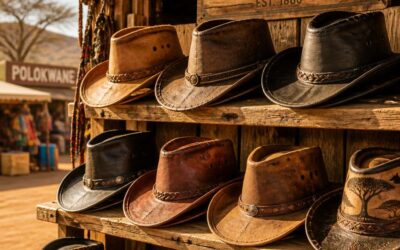
The Kalahari is an abrasive country. Windborne grit finds every seam and crease, while thorn scrub and barbed wire lie in wait for anything less than full grain. A leather hat is the enduring answer to this daily assault, a shield that grows more character with every hard season. I have seen a well-kept leather hat outlast three pairs of boots, its surface developing a map of the wearer’s life in the veld.
These western hats Upington are not merely about protection; they represent a tangible investment in daily endurance. The right hide, often from local cattle, is thick enough to deflect a falling branch yet supple enough to be broken in over a single week. The felted finish resists the sun’s bleaching effect, and the natural oils within the leather repel light rain and morning dew.
– A reinforced crown that holds its structure in high wind
– A leather sweatband that moulds to the wearer’s forehead
– A chinstrap or stampede string for horseback and quad work
– A finish that accepts regular conditioning without darkening unevenly
This is the tool of the trade for those who repair fences, manage livestock, or simply refuse to let the elements dictate their pace. The weight of a good leather hat is a constant, reassuring presence, and in this climate, that solidity is precisely what makes it an indispensable companion. The market for western hats Upington understands this distinction, valuing endurance over fleeting fashion.
Modern Twists on Vintage Designs
Drawing from a century of frontier photography, today’s western hats Upington blend old silhouettes with contemporary materials. The cattleman crease persists, but now appears in lighter felts with hidden ventilation channels. A creased pinch front, once a practical hold for gloved fingers, becomes a stylistic signature.
Consider the current range:
- Gambler hats with bound edges and lower crowns
- Tom Mix styles trimmed with woven horsehair bands
- Brick crowns shaped with a softer, modern hand
These pieces respect the original proportions while swapping heavy linings for breathable cottons. I have seen the result photographed as heritage yet worn as everyday ease. For Upington residents, the appeal is immediate. You retain the authoritative brim line and the deep, dusty colourways. You lose the stiffness. Western hats Upington have never been more versatile, moving from a cattle auction to a riverfront dinner without a second thought.
Lightweight Travel-Friendly Hat Options
Some of the finest western hats Upington has ever seen are those you forget you are wearing. A hat for travel should vanish from your thoughts the moment the wind settles. It should fold into a bag without rebellion and emerge with its crease intact. That is the quiet magic of a crushable felt. The telescoped crown holds its shape through a tumble in the boot of a bakkie, yet softens against your brow like a well-worn glove.
The current movers and shakers in this category are built for the journey:
– Wool felt blends with a supple hand that rolls without cracking
– Brims wired for shaping, then flattened for packing
– Interior sweatbands that wick moisture on long stretches of gravel road
For a weekend escape to the Augrabies or a slow drive down to the Kalahari, these hats offer a lightness that the old heavyweights never could. They carry the lineage of the frontier, but they do so without the burden. You will find that a good travel hat earns its keep in the quiet moments, the ones spent staring at the horizon with the sun low and the road still long. A genuine western hats Upington purchase now means choosing freedom over formality, and that is a trade worth making.
Choosing the Perfect Western Hat for Upington Conditions
Understanding Hat Shapes and Face Fitting
Choosing the right silhouette for your face matters as much as the material. A round face benefits from a high crown, like a cattleman crease, while a long face suits a lower, wider brim to balance proportions. In Upington, the harsh light demands a brim that shades your neck, but the wind can catch overly flat designs.
Try these markers when testing western hats Upington:
- Check that the hat sits one finger above your eyebrow.
- Ensure the brim edge follows your jawline without gaping.
- Confirm the crown shape matches your forehead width.
The fit must hold through a dry Kalahari breeze. A hat that shifts with every step becomes a nuisance. Your perfect pick feels secure, yet light enough for daily wear.
Materials That Withstand Sun, Dust, and Occasional Rain
Sun, dust, and the odd thunderstorm. Your western hats Upington must handle all three without losing shape. Felt remains the standard, especially a stiff beaver blend that repels moisture. Straw breathes under a 40 degree day, but a tight weave keeps dust from settling in your eyes. Leather gets stiff when it dries wrong, so treat it with oil before winter rains arrive.
Consider these material markers when you shop:
- A waterproofing treatment on felt
- A reinforced sweatband that will not rot
- A brim that snaps back after bending
I have seen cheap hats warp in one Upington summer. A quality roan felt costs more, but it survives the wind and the UV. The best western hats Upington feel heavy in quality, light on your head.
Sizing and Comfort for Long Wearing Hours
A hat worn from dawn to dusk in Upington becomes an extension of your own body. The Kalahari wind tests the fit, tugging at the brim until you notice the pressure points. You need a crown that sits deep, not perched, and a band that grips without squeezing. The right western hats Upington allow a finger to slide between the leather and your skull. That space lets air move, preventing the heat that pools under a tight fit.
The sweatband determines your endurance. A untreated leather band will crack and stiffen within a month, turning every tilt of the head into a raw distraction. Look for a moisture wicking liner that dries before the next morning. A hat that feels balanced when you nod is a hat you will forget you are wearing.
– The crown should not touch your scalp.
– The brim should clear your glasses or sunglasses by a finger’s width.
– The pinch should follow your natural brow line.
Matching Your Hat to Your Lifestyle and Activities
Choosing a hat in Upington is less about fashion and more about honesty. A hat that looks grand in the shop but cannot handle a dusty wind will disappoint you by Tuesday. Western hats Upington have a practical lineage, and the best ones respect that.
Your activities should dictate the details. A horse rider or field worker needs a lower crown that does not catch the wind. A person attending meetings, church services, or family gatherings might prefer a taller crown with a sharper crease. Both are correct choices, but only for the right occasions. When selecting western hats Upington, consider whether your hat will spend more time on your head or on the passenger seat of your vehicle. I have seen a delicate straw hat worn while feeding sheep, and it did not survive the week. I have also seen a heavy felt hat at a dinner table, equally out of place. Let your week decide.
Where to Buy and Customize Western Hats in Upington
Local Hat Shops and Boutiques in Upington
In Upington, the right hat shop knows your name by your second visit. Finding western hats Upington means visiting stores that understand the Kalahari’s demands. Local proprietors often learned the trade from family, so they know exactly how a hat should sit after a long day in the sun. You will see rows of straw and felt, but the real value lies in their advice.
Custom work happens in small workshops behind the main counters. Bands are replaced, brims are curled, and sweatbands are fitted to your exact head shape. Bring an old hat you no longer wear. They will restore it properly.
What to look for when choosing a shop:
– A willingness to measure your head correctly
– Stock that includes both local and imported brands
– Someone who asks about your daily routine
The best western hats Upington are the ones tailored to you. A few shops even let you watch the process, which is a rare pleasure.
Custom Hat Makers and Hat Bar Experiences
Steam rises from iron blocks in a few backstreet workshops where custom hat makers ply their trade. These artisans measure your head, discuss your daily routines, and shape felt or straw into something distinctly yours. I have watched a maker revive a beaten straw hat. The brim curves, the crown creases, and the band is fixed in place.
Custom makers in Upington typically offer:
- Hand shaped crowns and brims
- Replacement sweatbands stitched to your exact head shape
- Restoration of heirloom hats that other shops would discard
Hat bar experiences offer a faster route to a personalised look. You pick your base, then experiment with bands, buckles, and creases under expert guidance. It is hands on, immediate, and deeply satisfying!
For anyone serious about western hats Upington, a custom fitting changes how you understand headwear. The result is a hat built around your skull, not a shelf item that merely sits there.
Online Shopping and Delivery Options to Upington
Courier boxes now land on Upington doorsteps with surprising speed. An Akkerhof hat ordered from a Gauteng stockist can arrive within two working days, while smaller Karoo makers often ship via postnet to the mall. This shift has widened the range for western hats Upington, giving local buyers access to brands that never reach the physical shelves.
I have purchased both felt and straw hats online, and the key is honest communication. A seller should provide a video of the hat in direct sunlight, because the Kalahari glare changes every colour! Many online stores offer a customisation field for crown crease or brim edge.
Delivery options typically include:
- Door to door courier with tracking
- Postnet collection points along the main road
- Local shop pickup when the seller has an Upington partner
Caring for Your Western Hat in Upington’s Environment
Cleaning and Maintaining Felt Hats
Felt hats need attention in Upington’s dry, dusty air, and the Kalahari dust settles into the fibres quickly. For western hats Upington wearers, a soft bristle brush is the first defense. I brush counterclockwise after each wear to lift the dust before it works into the felt. For stubborn marks, use a damp cloth with a gentle touch. Avoid soaking the hat, as water distorts the crown. When rain catches you off guard, let the hat dry naturally on a hat form. Never place it near a heater!
Consider these steps for routine maintenance:
– Shake out loose dust before brushing
– Use a lint roller for lighter debris
– Rotate between two hats to let felt rest
Washing is rarely good for felt. Steaming works better. Hold the hat over a kettle spout and brush away set-in grime. Store felt hats crown up in a breathable box. Heat and moisture remain the main threats in Upington. This routine keeps western hats Upington in good shape for years.
Protecting Against Heat, Moisture, and Dust
The Kalahari sun does more than create shimmering heat waves. It bombards your headwear with relentless UV radiation that weakens felt fibres and fades band colours. The dry air pulls moisture from the leather sweatbands, causing them to crack and lose their shape. Western hats Upington residents wear daily face a unique combination of intense solar exposure and abrasive airborne grit.
Heat protection requires more than shade. Leaving a hat on a car dashboard turns it into a warped shell within an afternoon. The interior temperature rises past sixty degrees, softening the crown and destroying the brim’s structural integrity. Store your hat on a rack away from windows and sealed vehicles.
– Use a stiff brush after every outing to dislodge dust before it bonds to fibres
– Apply a leather conditioner to the sweatband every few weeks
– Keep a spare hat band to swap out when the original becomes sweat stained
Moisture arrives rarely but violently. A sudden Upington thunderstorm can saturate a felt hat within seconds. The fibres swell and reshape unpredictably, leaving you with a misshapen product. Quick action matters. Blot the surface with a towel, then place the hat on a form inside a ventilated room. Never use direct heat sources.
Rotating two hats for different occasions extends both lifespans. One hat gets rest while the other absorbs the day’s punishment. This simple habit keeps western hats Upington owners enjoying crisp silhouettes and reliable protection throughout the long summer months.
Storing Hats Properly to Preserve Shape
The most common mistake is hanging a hat on a door hook. The brim’s weight stretches the crown and leaves a permanent crease. Western hats Upington owners know a proper hat form or crown block is non negotiable. You can buy a simple wooden form for under two hundred rand. Place it on a high shelf, away from children and pets.
The environment demands vigilance. A dusty Upington breeze carries fine grit that settles into the felt. Protect your hat with a cotton bag between wears. Avoid plastic covers, they trap the moisture that the dry air usually keeps away.
Consider keeping a spare hat form in your office. A second location encourages rotation. This habit preserves the silhouette of your western hats Upington collection, allowing each piece to rest and retain its original shape.
– Never store a hat on a flat surface
– Keep it on a form or a hat stand
– Position it away from direct sunlight
Simple Repairs and Extending the Life of Your Hat
No hat escapes Upington unscathed. A loose band or a bent brim signals it is time for simple repairs rather than replacement. You can re-stitch a sweatband with a curved needle and waxed thread. For dents, hold the crown over a steaming kettle, then reshape with your hands. Let it dry naturally.
Consider these maintenance tasks:
- Check the hat band monthly for fraying.
- Reinforce the brim joint with fabric glue.
- Replace worn drawstrings quickly.
These small acts extend the life of your western hats Upington investment. Regular attention to minor damage prevents costly restoration later.
Seasonal Rotations and Hat Refresh Tips
Upington’s seasons demand more than stubbornness from your wardrobe. One hat cannot carry you through both scorching summers and sharp winter evenings. Rotating your collection protects each piece from unnecessary stress. I wait for the first cold front to switch from straw to felt, and my hats last longer for it.
Before storing a hat for the season, give it a proper refresh:
– Wipe the sweatband with a damp cloth and mild soap.
– Steam the crown lightly to relax the fibres.
– Brush the brim in one direction.
These small rituals make your western hats Upington feel fresh again when they return to rotation. They also reduce the need for professional cleaning and keep the original silhouette intact for years.



0 Comments